

Think about the last time your whole family ended up in the same room without anyone planning it. Maybe dinner ran long, with everyone still laughing around the table an hour after the plates were cleared. Maybe the kids wandered into the kitchen during dinner prep and stayed long enough to share friendship updates and the highlights of Tuesday night's soccer practice. Maybe Friday night board games turned into "just one more round." Or maybe it was an evening with friends, where the party drifted into the kitchen, because that was where everyone wanted to be.
Those are the moments most families want more of. At Harty Interiors, we design homes for busy families across Sacramento, Northern California, and the Bay Area, and the request underneath almost every project is some version of the same thing. People want homes that bring together the people they love. That kind of togetherness can feel like luck. In my experience, it's usually design.
A home feels connected when it's designed around how the family actually lives, not just how open the floor plan is. The pull in the other direction is real. Between work, activities, homework, and screens always within reach, families end up in different rooms, eating at different times, passing each other in the hallway without really connecting. The right home makes connection the easy choice.
That's why I design function first, and why the work starts well before anyone picks a finish. It starts with the rituals you already have.
Good design for togetherness starts long before finishes or floor plans. It starts with understanding two things: the rituals your family already connects over, and what's currently getting in the way of them. Everything I design follows from those answers.
The best place to begin isn't Pinterest. It's your own week.
A family's real rituals are the most useful information in a whole project, and they're usually specific. One family cooks together every night and needs two people to move through the kitchen without colliding. Another has a baker who wants the grandkids pulled in close, which means a lower stretch of counter at the right height for small hands. A standing game night needs a table that seats everyone and a place to keep the pieces between rounds. Each of those is a different design, and the difference isn't decoration. It's where things go, how the space is zoned, and what gets built in.
Sometimes what a ritual asks for is bigger than a single feature. In older homes with a formal living room up front and a small dining area tucked behind it, I'll often suggest swapping the two. A large dining table that greets you at the door says something before anyone speaks: people gather here, meals matter, there's room for you. It's a small structural change that resets how the whole home feels to walk into.
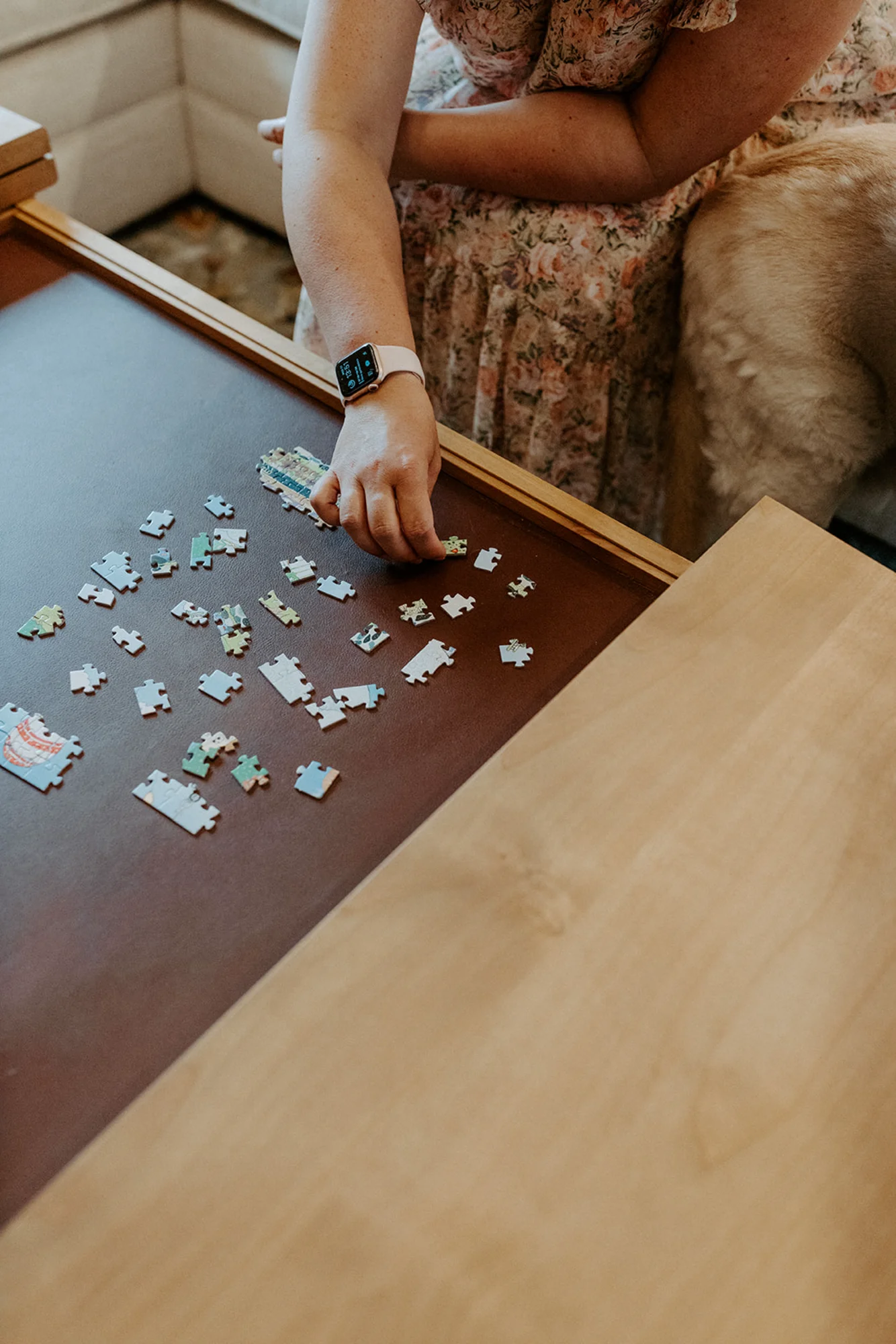
One family I worked with loved doing puzzles together but had nowhere to leave an unfinished one out without it taking over the dining table. So we designed a custom puzzle table with folding tops. Now they can start a puzzle, fold the table closed when they need the surface back, and come back to it right where they left off. The ritual they love has a permanent place in their home.
The features that make a home feel like it belongs to one family are rarely the ones you'd find searching online. They come from asking the right questions and looking closely at how you already live.
Most families don't arrive talking about connection. They may come in sharing frustrations. The layout feels awkward. Everyone crowds the same three feet of counter while one person is trying to cook. There's nowhere for guests to sit that isn't in the way. Evenings are lost as four different people look at four separate screens.
Those are real problems, but I've learned there are often clues that lie beneath them. A crowded counter usually means one set of hands at a time, so the people who'd cook alongside you get turned into spectators. Nowhere for guests to sit means the cook ends up isolated the moment company arrives. An evening spent on four different screens is often a home without a space that makes staying together the easy thing to do. Those frustrations tell me where a home is getting in the way of the time a family wants together, and that's where the design has to focus.
The kitchen deserves its reputation as the heart of the home. Food and conversation pull people in, and it's usually the most-used room in the house. But a kitchen earns that role through how it functions when the whole family is living inside it.
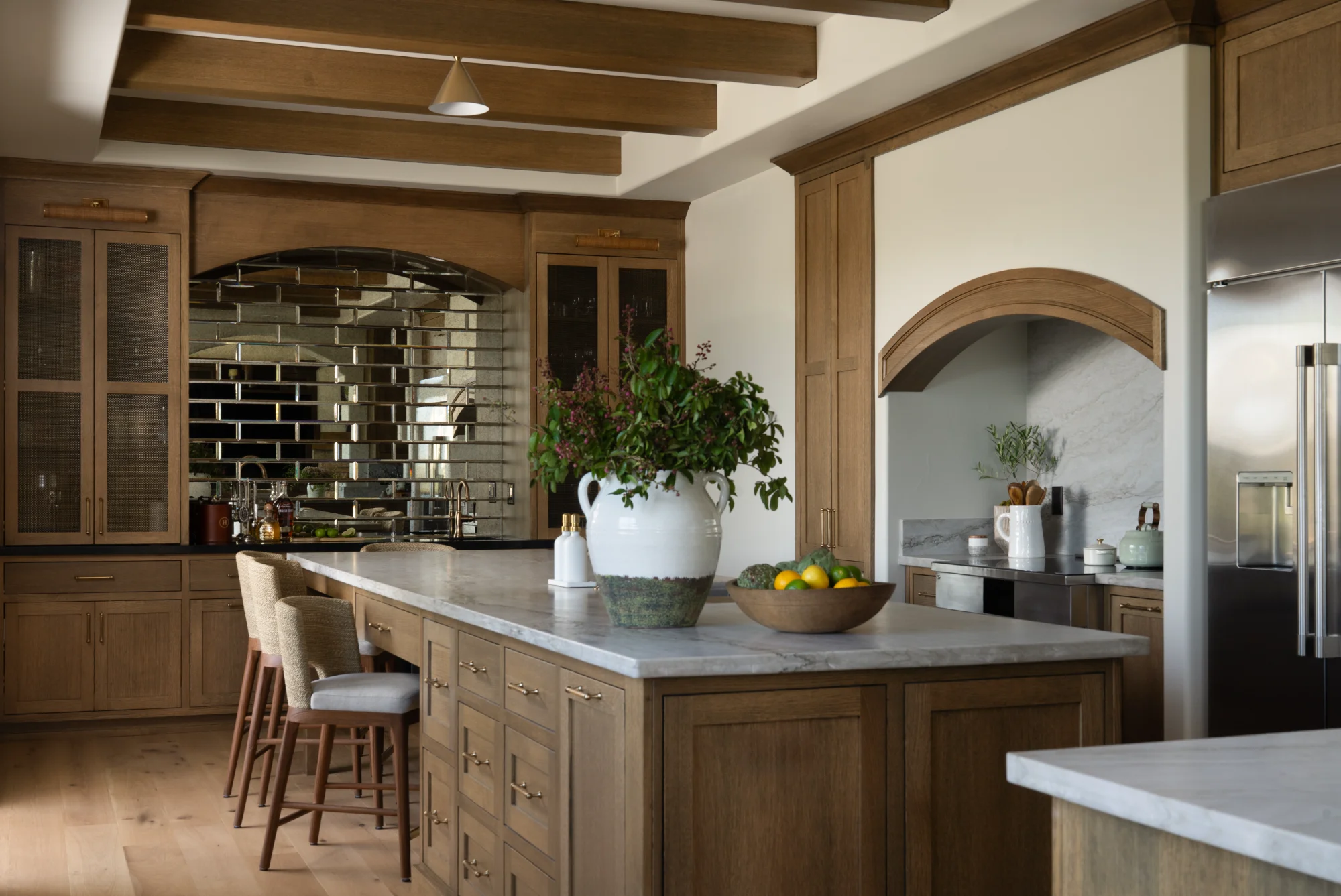
I worked with a client who told me people were always in her way when she hosted. Her U-shaped kitchen boxed the cook and her guests into the same tight space. We reworked the layout and added an island to reset the whole dynamic. Now guests gather on one side of the island while the working side stays clear for the cook. She can keep cooking and stay in the conversation at the same time.
A kitchen designed for connection is worth a deeper look than I can give it here. For more on laying one out around real family life, see How to Redesign Your Kitchen Layout for Better Flow and Storage and A Kitchen Designed for Togetherness.
Once you start designing around how a family gathers, the same thinking extends well past the kitchen. Every family home needs a few places where people naturally want to linger. A dining room, a family room, a game corner, the backyard, even a hallway sized for the way everyone actually moves through it, each can do real work to bring people together.
You can't force togetherness, but you can design the kind of rooms that invite it. Open concept gets treated as the answer to connection, but a wide-open floor plan on its own doesn't create it. What makes the difference is a home with specific spaces built in, each giving someone a reason to stay, and zones like that often matter more than square footage. Here are a few that consistently earn their place:
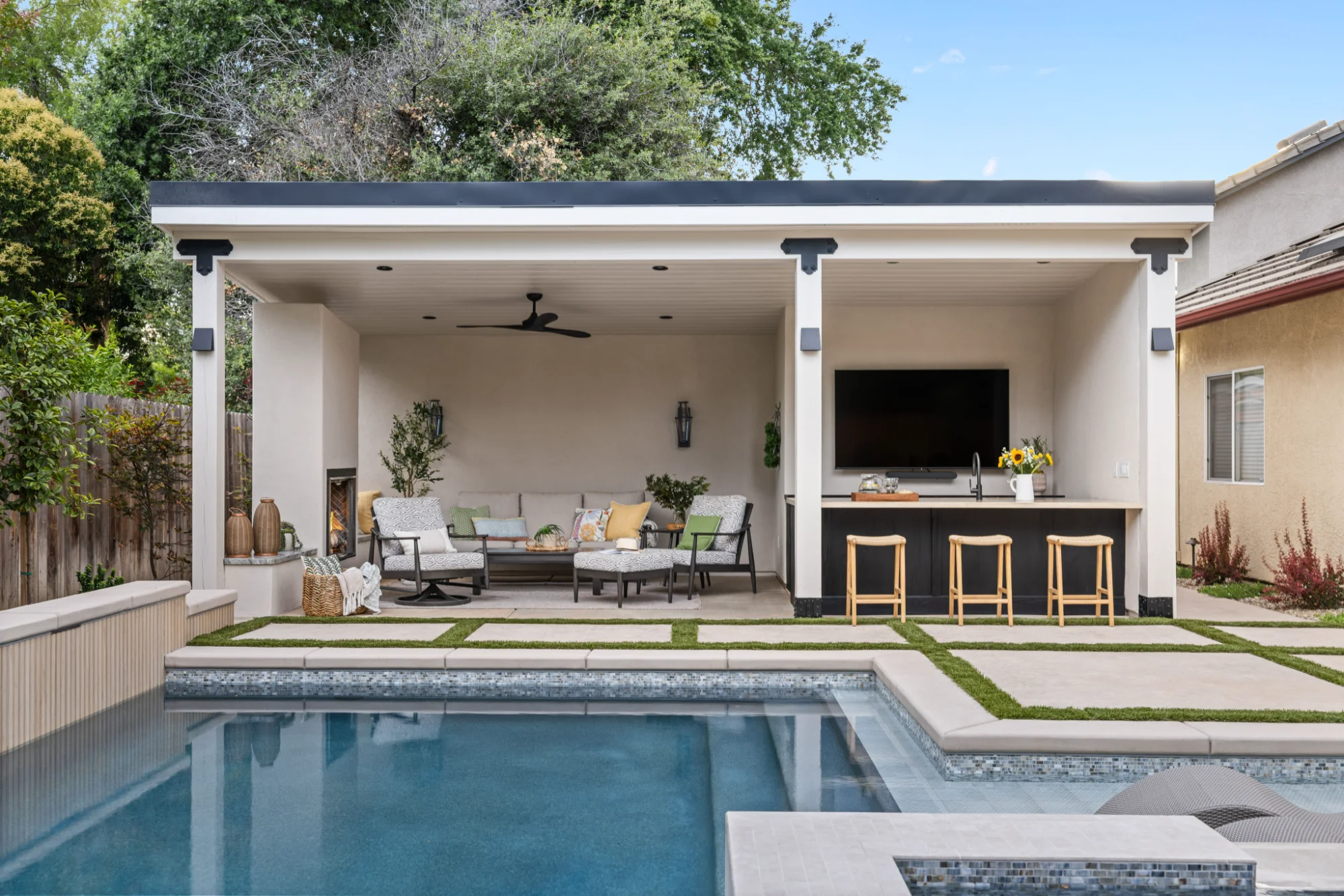
Outdoor space might be the most underused gathering spot of all. My own home is a good example. My family loves to entertain, but for years, our Sacramento summers left the backyard too hot to use for much of the season. Once we remodeled it, that changed completely. Now the kids swim while the adults settle into the cabana, food comes out, and everyone stays put for hours. A good outdoor space gives every generation room to enjoy themselves at the same time, which is exactly what togetherness asks for. For more on that, see: Transforming Your Backyard and Backyard Transformation.
The best homes are designed as a whole, with every space considered for the part it plays in bringing people together.
Before any of this gets built, it comes together in one place. The MasterPlan is where we take everything about how your family lives, the rituals worth keeping and the friction worth fixing, and turn it into one clear direction before anything is built. That way, the decisions that come later all point the same way, toward a home that actually fits how you live.
The clients who are happiest are the ones who tell me the same kinds of things a year after their remodel. Their kids roll into the kitchen after school, ready for snacks and full of life updates to share. They fill their kitchen with friends, wine, and flowing conversation. Their puzzle still lives on its table in the family room, with kids and adults alike gathering around to try to add the next piece. Each change may seem small on its own. Together, they add up to a home designed for a fulfilling life.
If you're in Sacramento, Northern California, or the Bay Area and want a home that brings your family together, I'd love to help you picture what that could look like. Get in touch to start the conversation.


Our use of 3D architecture software delivers a truly collaborative design experience, where you can see how different options or layouts will actually look in your virtual space, helping you make informed design decisions.
Don’t worry about getting your tape measure out! For smaller or one-room projects, we typically take measurements during our first in-home consultation. For larger remodels, we’ll bring an assistant.
Do you have original blueprints or any construction documents from previous renovations? Perfect! We'd love a copy.
Using 3D software, we create detailed drawings which are visual plans of your kitchen or bathroom remodel. They show walls, windows, doors, fixtures, and interior finishes, matching the exact scale of your space.
Drawings ensure your contractor gives you an accurate bid and are used as a working document for the crew. All our design plans meet NKBA (National Kitchen & Bath Association) standards and are heavily detailed.
Please note that drawings are typically about 75% accurate, as we don’t know what's behind your walls. The proposed design may change once the wall removal begins.
We will have your kitchen or bathroom design ready within about 4-6 weeks, depending on project scope, number of revisions, and level of detail with the initial draft completed within 1-2 weeks.
Yes. Harty Interiors is not a licensed contractor, so we ask that you enter into contracts directly with your chosen contractor. However, we can help you find a suitable contractor through our trusted network of trade professionals.
Absolutely! Our Interior Design Consulting Services are perfect if you’re working on a home renovation project on your own, but want professional advice before making costly mistakes.
