

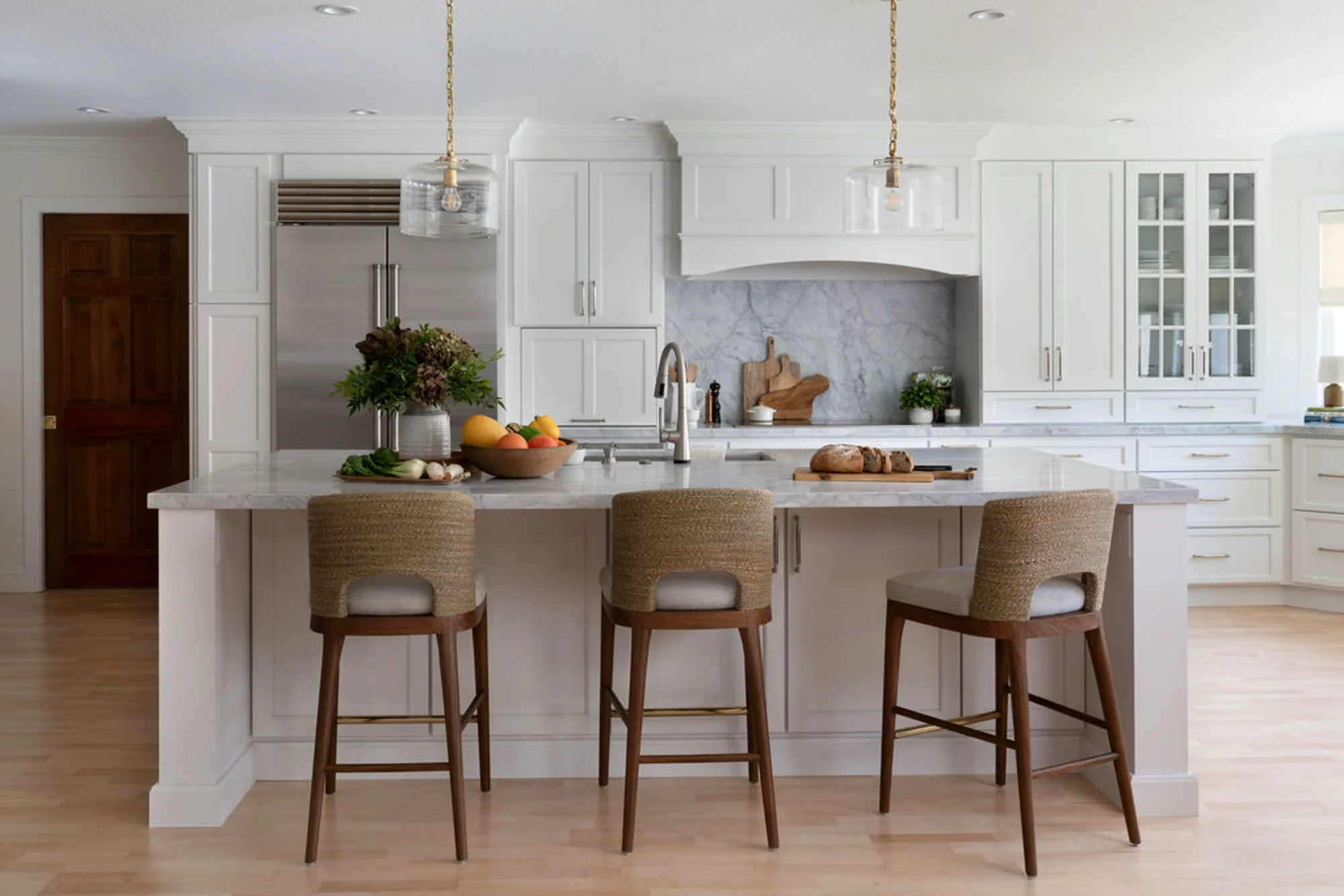
The kitchens that feel effortless to use have one thing in common. The layout came first, before the finishes were chosen, before the appliances were selected, and before a contractor was ever involved.
Cabinetry and countertops matter, and we'll get there. But the kitchen where dinner comes together without the scramble, where guests gather without getting in the way, where the whole space just feels like it fits, that's a layout decision, made long before a finish is chosen.
It's worth saying plainly: a kitchen that's designed well changes more than how you cook. It changes how connected you feel at home and how welcoming your space feels to the people you want to share it with. Clients tell us they started hosting again, started cooking meals they'd given up on, started choosing to spend time in the kitchen rather than rushing through it. A layout that fits your life has a way of giving that life more room to unfold.
At Harty Interiors, we've spent years designing kitchens across Sacramento, Northern California, and Lake Tahoe for families who want a home that works as well as it looks. What we've learned is that the projects that go smoothly, that come in on budget and feel right from the first week of living in them, almost always start with the right questions about how your family lives before anything else begins.
Here's a closer look at what it takes to get there.
When a client invites me into their kitchen for the first time, they usually start by pointing at the cabinetry. The dark stain that felt dated the moment they moved in. The doors that don't quite sit right. The finish that was never really them.
I'm listening. But I'm looking at something else.
The first thing I notice is the layout. Where the refrigerator sits in relation to the sink, where the cooktop lands, and how much usable surface surrounds each one. That sequence tells me almost everything I need to know about how the kitchen is working, and where it isn't.
I recently walked into a kitchen in the Sacramento area that had generous square footage, good bones, and a layout that made cooking exhausting. There was a small island in the center with a cooktop built into it and almost no counter space on either side. Two sinks sat on opposite ends of the room. Every time you pulled something from the refrigerator, you had no clear place to set it. Every time you moved between stations, you were circling the island.
The family had made it work for years. They'd just never realized how much effort that was costing them.
The good news is that most kitchen layout problems are predictable. After years of walking into kitchens across Sacramento and Northern California, the same issues show up again and again regardless of the size of the space or how recently it was last updated. Knowing what they are makes them much easier to solve.
When you cook, there's a natural rhythm: refrigerator to sink to cooktop. You pull ingredients, wash and prep them, then move to the heat. When those three elements are too far apart, or separated by an island you have to walk around every time, that rhythm breaks down. Every meal costs more steps than it should. Keeping this sequence tight is one of the first things I look at in any kitchen, regardless of size or scope.
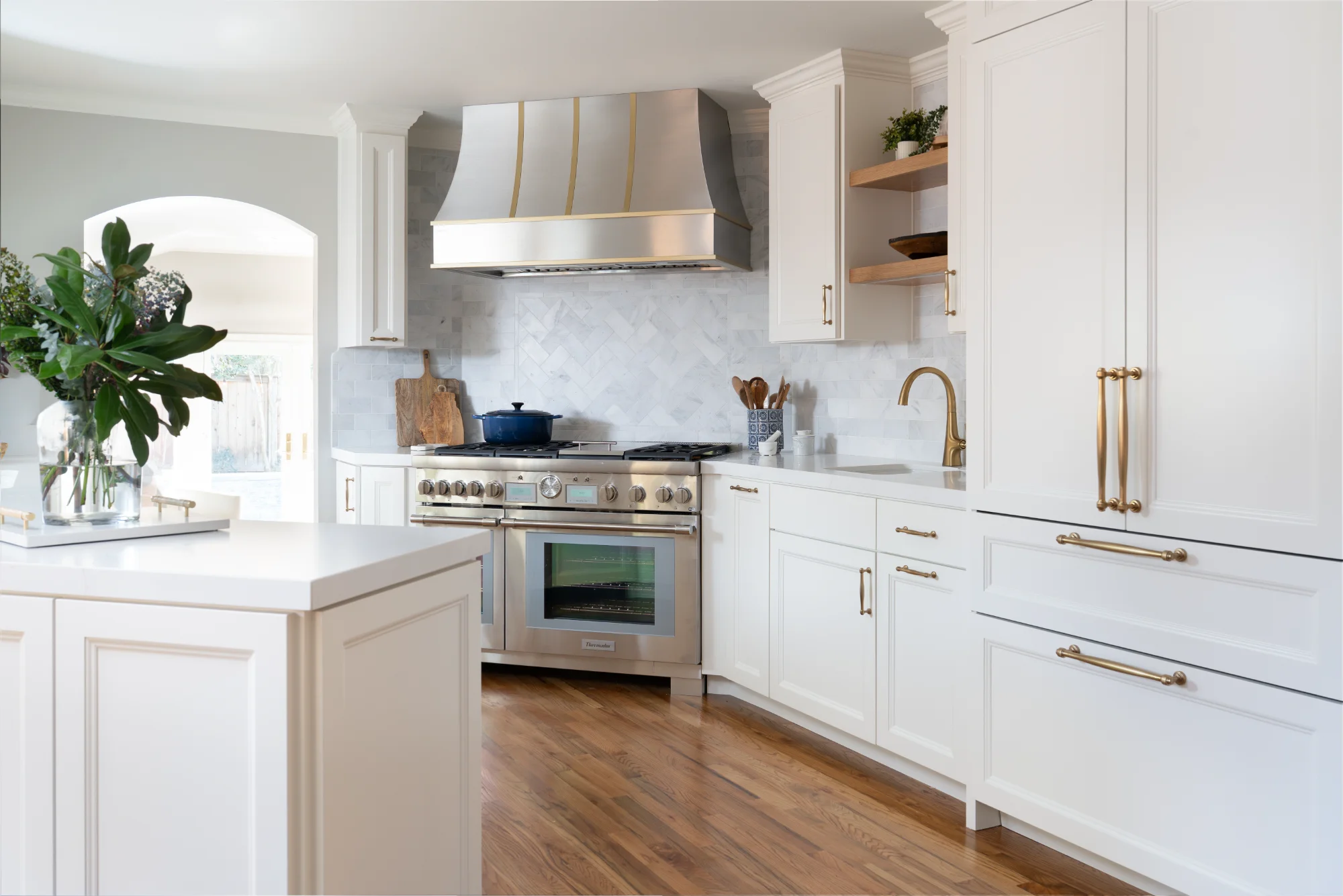
A large island is one of the most requested features in a kitchen remodel, and one of the most misunderstood. While an expansive island looks great in photographs, without a sink or clear relationship to the cooking area, it can become a barrier to your workflow rather than a hub. In most cases, the fix is simpler than people expect: a prep sink in the island keeps the workflow tight and the cook connected to the rest of the room.
Two islands, which entertainers often request, frequently turn the cook into the only person in the room who isn't having fun. The typical setup puts a prep island near the cooktop and a serving island with counter stools further out, leaving the cook isolated on one side of the kitchen while guests socialize on the other. If you have that much space, a secondary prep kitchen behind the main one almost always serves the family better, keeping the main kitchen open, connected, and easy to gather around.
Lighting is one of the most overlooked layout decisions in a kitchen remodel, and one of the most consequential. The most common mistake is placing recessed lights in the center of the room for visual balance rather than above the counter edge where the work actually happens. The result is a kitchen where you're standing in your own shadow every time you cook.
Recessed lights belong directly above the counter edge, not the walkway. Under-cabinet lighting fills in the rest. Pendants and sconces add warmth and personality, but they can't replace the task lighting that needs to be in the right place first.
Avoiding these mistakes starts before a floor plan is drawn. Before I touch a layout, I ask a lot of questions. Not about style preferences or finish directions. About how the family lives.
The conversation usually starts something like this:
Every answer points to something specific in the layout. Where a family eats can determine if space is used for a dining table or more cabinetry and counter space. Whether someone bakes shapes counter height and material. Even which hand a client favors changes how the prep area is oriented.
A kitchen designed around these answers doesn't just function better. It fits the people who use it every day.
Good questions lead to good decisions. Here is what those decisions look like in practice.
Every kitchen has a natural sequence: refrigerator to sink to cooktop. When those three elements are positioned to support that rhythm, cooking feels easy. In larger kitchens where they end up too far apart, adding a prep sink to the island almost always solves the problem. The workflow stays tight regardless of the square footage.
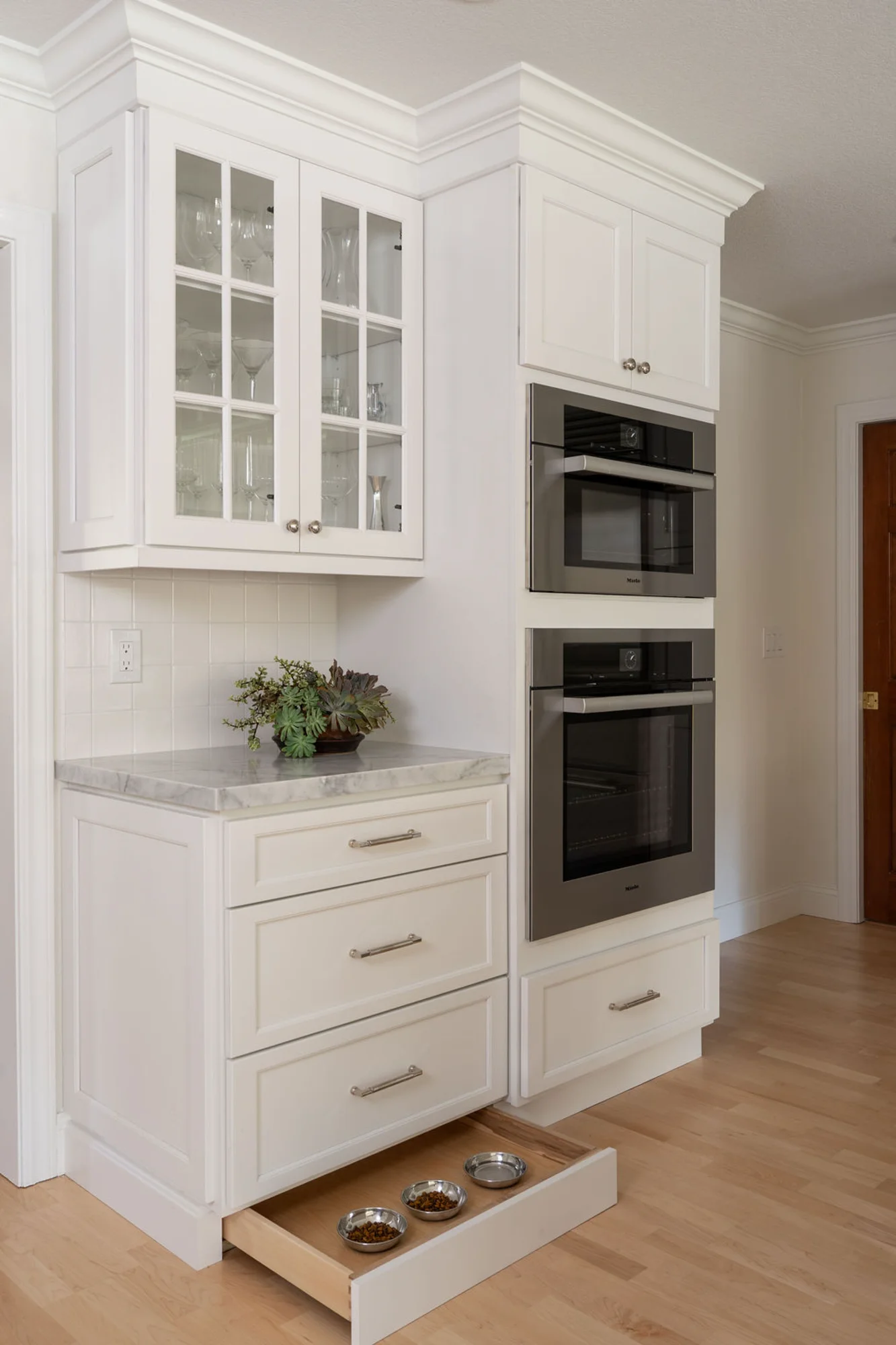
Beyond the core workflow, a well-planned kitchen thinks in zones. A dedicated prep area. A cleanup zone with the dishwasher positioned for easy unloading. A place for kids to access snacks without walking through the middle of dinner. A gathering spot where guests can be close without getting in the way of the cook.
When each zone has a clear purpose and everything needed for that purpose is right there, the kitchen stops feeling like a space you manage and starts feeling like one that supports you.
The most useful storage solutions aren't just about adding more cabinets. They're about putting the right solutions in the right place.
The question to ask isn't how many cabinets you need. It's what you need to store, and where it should live relative to how you use it.
The layouts that hold up over time are the ones that were designed with the full picture in mind: who uses the space, when, and what they need to be able to do there without getting in each other's way. That means a snack zone accessible to children without disrupting the cooking area. Counter space wide enough for two people to prep side by side. An island that invites guests in rather than keeping them at a distance. When these decisions are made early, the layout supports the full reality of daily life.
The principles above play out differently in every home. Here are two projects from Northern California that show what they look like when they come together around a real family and a real space.
One project started with a dark, dated kitchen. The family knew something was off. They just couldn't pinpoint what. The island had a cooktop but no real landing space, and the two sons in the house rarely cooked. The workflow was broken in ways the family had learned to work around rather than question.
After the remodel, with a larger island, a proper prep sink, and a layout that gave multiple people room to work at the same time, something shifted. Both sons started cooking regularly. One had always been drawn to it. The other hadn't cooked much at all before. With more space to give it a try, he found his way into the kitchen and made it his own.
Three generations lived under one roof: grandparents, mom & dad, and children, each with their own schedule, their own preferences, and their own relationship to the kitchen. The challenge wasn't just functional. It was aesthetic too. The family wanted two-tone cabinets, two different countertop materials, a blue backsplash, and mixed hardware finishes. Every person in the household had a point of view, and the design needed to honor all of them without pulling apart at the seams.
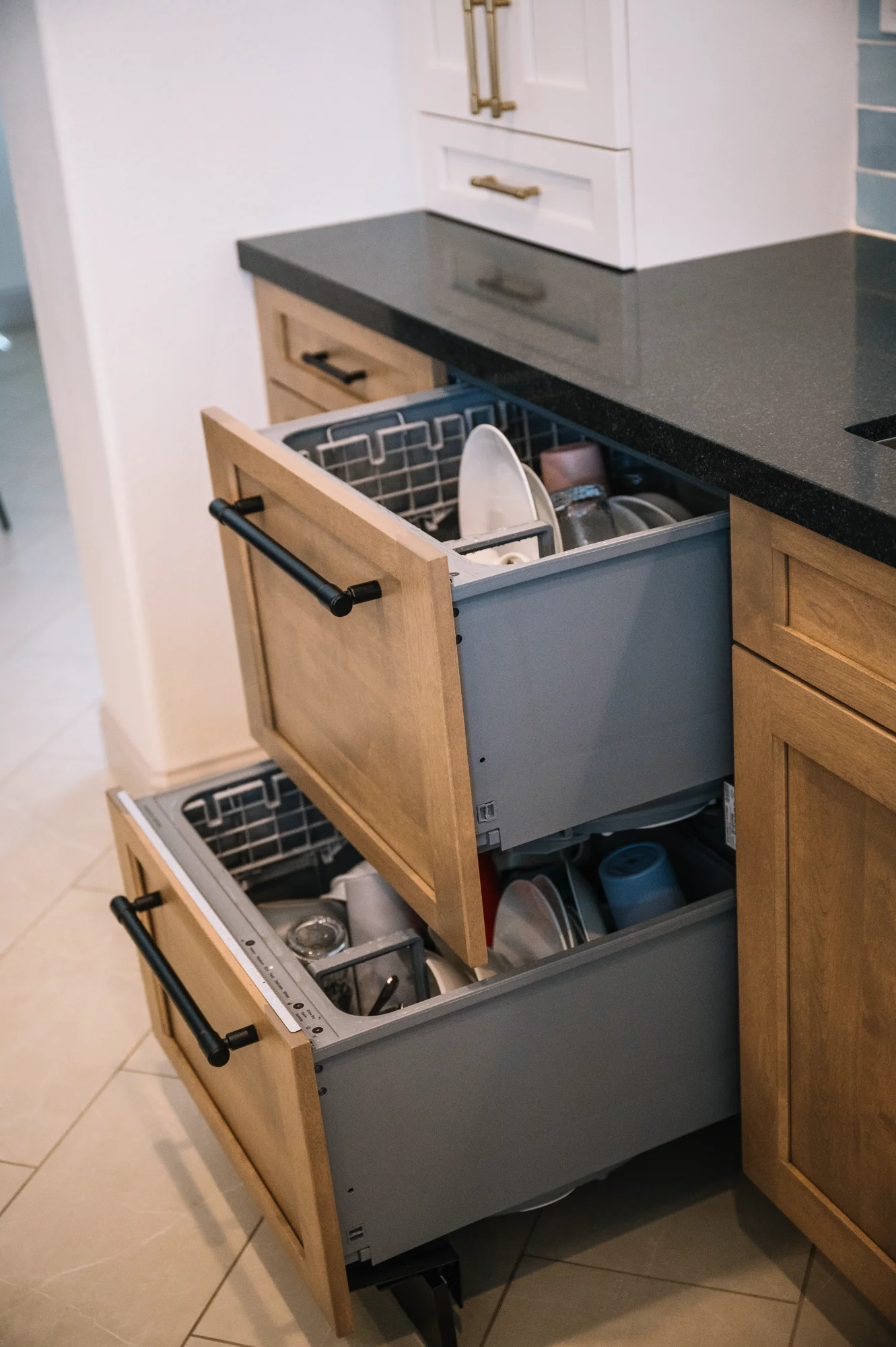
The layout had to account for all of it. We added a dishwasher drawer unit alongside the existing full dishwasher, giving the family what amounts to three dishwashers running on three different schedules. Counter zones were designated so multiple people could be in the kitchen at once without getting in each other's way. The space needed to work for everyone, all the time, without anyone having to wait their turn.
The aesthetic came together through a piece of wallpaper the grandmother had already installed in the kitchen nook. It held all the colors the family wanted in one place and became the foundation for the entire palette. Creamy white cabinetry paired with lighter wood-stained uppers. Veined quartz on the island, black granite on the perimeter. Gold hardware on the white cabinets, black on the wood. The blue backsplash the grandmother had always wanted.
The client has hired me back for additional projects and tells me the family gathers in that kitchen now. They cook together. The kids bake around the island at the holidays. That's what a layout designed around real life makes possible.
Picture a kitchen where a second person can step in and help without disrupting the flow. Where guests gather at the island and feel included rather than in the way. Where the holidays feel generous instead of chaotic, and an ordinary Tuesday night feels easier than it used to.
If any of that feels far from where you are right now, that's exactly where we start. The MasterPlan is Harty Interiors' signature planning process, a comprehensive layout and design document that defines your priorities, scope, and budget before a contractor is ever involved. It takes your lifestyle and your space and turns them into one clear direction before anything is built or bought. I'll guide you through every decision in the right order, so the process feels manageable and the outcome feels right.
If you're planning a kitchen remodel in Sacramento, Northern California, or Lake Tahoe, I'd love to walk you through what that looks like for your home.


