

There's a particular kind of excitement that comes with planning a home remodel: inspiration images spread across your dining table, late-night conversations about your dream kitchen, the moment you can finally see your vision taking shape. But somewhere between that first spark and the day construction begins, many homeowners hit a wall of questions. How do we make sure all these ideas actually work together? What if we fall in love with something we can't afford? When do all these decisions need to be final?
The answer lies in something less visible than beautiful renderings or stunning material samples: thoughtful collaboration between your designer and contractor. When these partnerships begin during planning rather than mid-construction, projects move more smoothly, budgets stay grounded in reality, and those unwelcome surprises, the kind that derail timelines and drain budgets, become rare.
Considering that up to 78% of home remodeling projects go over budget, and nearly two-thirds of homeowners have gone into debt to pay for a renovation, clear partnerships between designers and contractors have never been more valuable.
A successful remodel isn't just about the final result, it's about the process that gets you there, and how that process feels for your family.
So, let's talk about why designer-contractor collaboration matters, and how it creates the kind of confidence that makes remodeling feel less overwhelming and more manageable.
Every home remodel involves multiple perspectives, whether you're renovating a bathroom or reimagining an entire kitchen.
You bring the vision and an understanding of how your family actually lives. Your interior designer translates those ideas into a cohesive plan. Your contractor evaluates whether those plans can actually be built, and what they'll cost. Each role looks at the project through a different lens, which is precisely why collaboration matters.
At Harty Interiors, we have our design concepts reviewed by a contractor before we ever present them to a client. That step allows us to confirm that our vision is both feasible and aligned with the established budget.
The result? Our clients don't fall in love with something that can't be built or that they cannot afford. Instead, they see realistic plans that are fully developed and achievable, concepts that can move from paper to reality without costly surprises or mid-project disappointments.
Many remodeling challenges don't appear during construction. They start much earlier, during planning, when ideas are still forming and decisions feel fluid.
When designers and contractors don't collaborate early, projects often run into the same avoidable issues:
When ideas live across emails, conversations, and inspiration boards rather than in one documented plan, contractors must price assumptions rather than clear intent. This leads to estimates that vary widely and makes it difficult for you to understand what you're actually paying for.
It's easy to fall in love with a concept before understanding its true cost. Without early contractor input, even a thoughtfully designed plan can unintentionally push a project well beyond budget, often after time, emotion, and resources have already been invested.
When selections happen mid-construction, timelines suffer. Materials may be backordered, contractors must adjust schedules, and work can stall unnecessarily, turning what should have been a smooth process into a series of frustrating delays.
These issues aren't uncommon, but they are avoidable with the right process.
To prevent these kinds of pitfalls, our team at Harty Interiors begins with what we call the Interior Design MasterPlan.
Before detailed drawings or material selections begin, your ideas, often pulled from Pinterest boards, magazine clippings, and conversations about how you want your home to feel, are organized into one comprehensive document. This plan outlines the full scope of the project, including elements that may initially feel aspirational.
At this stage, we bring in a contractor to provide a realistic budget range based on the MasterPlan. This isn't a line-item estimate, but a grounded assessment of whether scope and expectations align.
If they do, we move forward. If not, adjustments happen before you invest heavily in detailed selections, protecting both your budget and your peace of mind.
This approach means you never fall in love with a design that can't be built or financed. Every decision is tested against reality from the start, ensuring your vision remains achievable throughout the entire process.
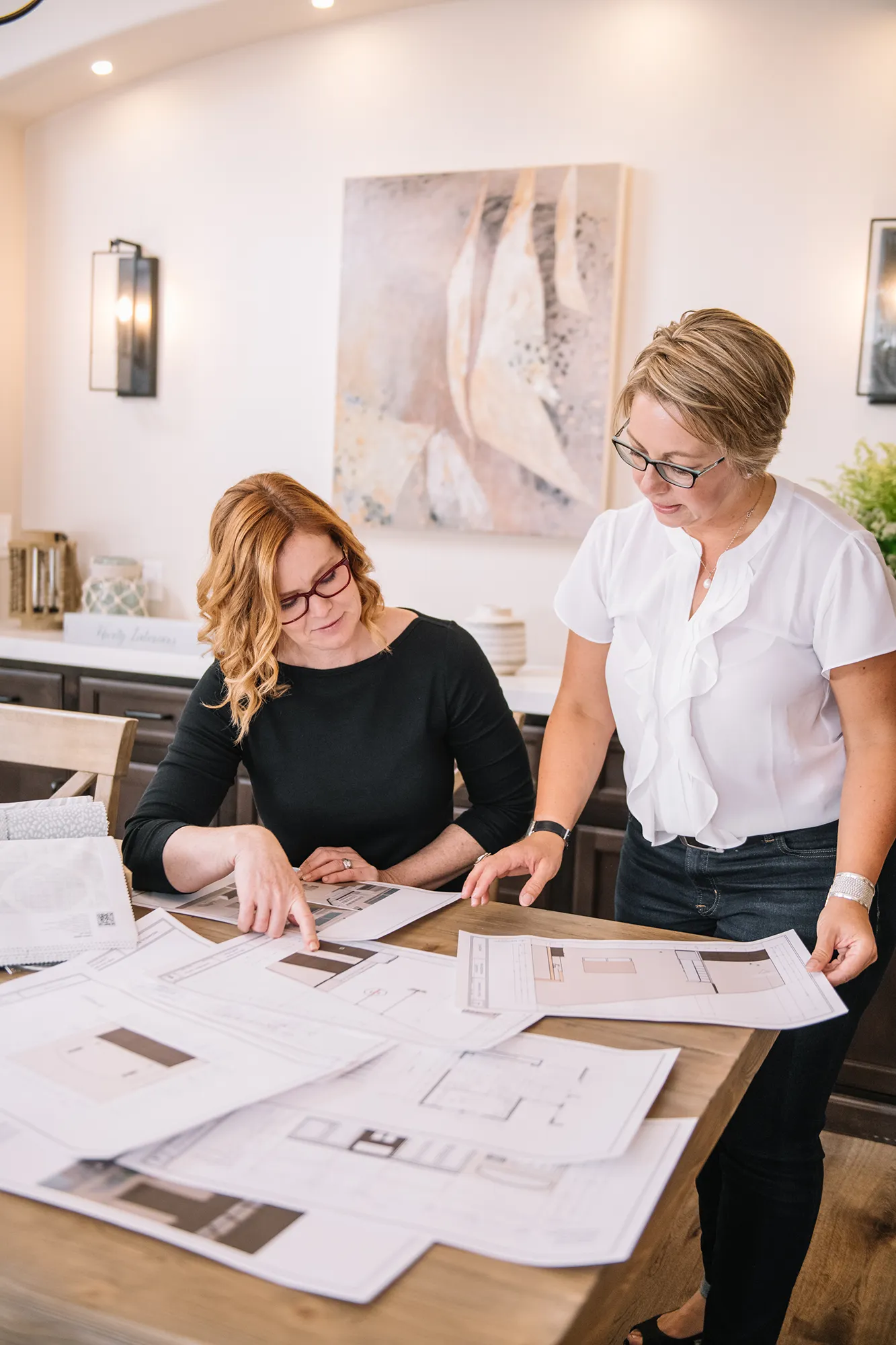
A remodel feels smooth when expectations are clear, decisions are intentional, and everyone works from the same plan. That clarity comes from coordination that begins on day one.
Most homeowners are highly visual. Seeing a space before it's built helps ideas feel concrete and makes decisions easier.
Accurate renderings allow you, your designer, and your contractor to reference the same vision, reducing misinterpretation and second-guessing later.
Renderings only help when they reflect reality. Placeholder elements or vague visuals can unintentionally set expectations that don't match what's possible during construction.
Keeping visuals aligned with real materials and layouts helps prevent frustration during the build.
Early planning reveals issues that are far easier to resolve before construction. Addressing the door swings that conflict with cabinet placement and the plumbing limitations that impact fixture choices early keeps the build phase predictable and calm.
Early planning reveals issues that are far easier to resolve before construction. Questions about door swings, structural changes, plumbing limitations, all of these become simple adjustments on paper rather than costly problems during the build. Addressing these details early keeps the build phase predictable and calm.
If you're planning a remodel, you should feel confident in both your interior designer and your contractor. After all, you'll be working closely with both throughout the process.
Design-build firms handle design and construction under one roof. Communication happens internally, and coordination can feel streamlined.
This approach works well for many projects, but it often offers less flexibility if you want to choose specific specialists or adjust team members.
Another option is hiring an independent designer and contractor who collaborate closely. In this model, the designer leads planning and documentation, while the contractor provides early input on feasibility, budget, and execution.
This approach allows homeowners to assemble a team tailored to their project's specific needs.
Whether you choose a design-build firm or assemble a team of independent but coordinated professionals, the structure itself matters far less than how clearly the process is defined.
Remodels become stressful when responsibilities are assumed instead of explained. You're left guessing who is leading decisions, who is pricing changes, or when your contractor is actually involved.
That uncertainty creates delays, misaligned expectations, and unnecessary tension, even when everyone involved is highly skilled.
What matters most is transparency. You should have a clear understanding of who's responsible for each decision, when your contractor becomes part of the conversation, how decisions are documented and evaluated, and what approvals look like at each stage. This kind of clarity protects your budget, preserves your timeline, and keeps everyone focused on creating the home you envision.
When roles are clearly defined and collaboration happens early, your project stays grounded in reality instead of constantly reacting to surprises. Clear communication creates trust, and trust creates the kind of calm that allows you to actually enjoy the transformation.
In the end, a smooth remodel isn't defined by whether it's called "design-build" or "designer-led." It's defined by thoughtful coordination and a shared commitment to working together from the very beginning.

The difference between a smooth remodel and a stressful one comes down to planning, alignment, and collaboration that happens long before construction begins.
At Harty Interiors, collaboration starts early. We bring contractors into the process before selections are finalized, organize your ideas into a clear MasterPlan, and test your vision against real numbers from the start.
This approach doesn't just prevent problems. It creates the foundation for a home that works beautifully for your family, both now and for decades to come. When every decision is intentional, coordinated, and aligned with how you actually live, the result feels effortless. Timeless. Exactly right.
If you're planning a remodel in Sacramento, Northern California, or Lake Tahoe, we'd love to walk you through how our MasterPlan process and early collaborative approach creates confidence from day one.
Reach out to start the conversation.


Early collaboration confirms that a design can be built within your budget before you commit to it. At Harty Interiors, a contractor reviews each design concept for feasibility and cost before it is presented to the client. That step keeps the plan grounded in real numbers and helps homeowners in Sacramento, Northern California, and Lake Tahoe move into construction with confidence.
A contractor should be involved during planning, before selections are finalized. Harty Interiors brings a contractor in once the MasterPlan is complete to provide a realistic budget range for the full scope. If scope and budget align, the project moves forward. If they don't, adjustments happen on paper, while changes are still simple and inexpensive.
A design-build firm handles design and construction under one roof, which keeps communication internal. An independent designer and contractor who coordinate closely let you choose specialists for your project. In that model, the designer leads planning and documentation, and the contractor advises on feasibility, budget, and execution. Either model works well when roles are clearly defined from the start.
Yes. In every Harty Interiors service, you can bring your own contractor or ask Yvonne to recommend one from her trusted network. Every project begins with the MasterPlan, which gives you a documented design concept and a realistic budget assessment your contractor can price with confidence. With Designer By Your Side, Yvonne stays involved during the build as your resource for decisions and guidance. With Full Service Design, Harty Interiors leads the design from concept through construction and coordinates with your contractor along the way.
Before construction begins, your team should explain a few things: who leads design decisions, who prices changes, when the contractor joins the conversation, and what approvals look like at each stage. At Harty Interiors, key decisions and changes are documented in writing. Everyone works from the same plan, and you always know where your project stands.
