

Most clients come to me with a number in their head and a little hesitation about saying it out loud. They're excited about what their kitchen could become. And somewhere underneath that excitement, there's a quiet worry that the numbers won't work.
Here's what I want you to know before we go any further: that conversation is one of my favorite parts of this process. Not because I enjoy talking about money, but because it's the moment where everything gets clearer. Once we know what we're working with, I can point you toward the right vendors, make the right selections, and build a plan that reflects what you want, without you having to guess whether you can afford it.
At Harty Interiors, we work with homeowners across Sacramento, Northern California, and Lake Tahoe who are planning meaningful, long-term investments in their homes. The budget conversation happens early, openly, and honestly in every single project we take on. Because the more you understand what shapes the cost of a high-end kitchen remodel, the better positioned you are to make decisions that protect your investment from the start.
In the greater Sacramento area, a high-end kitchen remodel is a meaningful investment, and the range varies significantly depending on scope. Here is what that typically looks like:
For homeowners in neighborhoods like Arden Oaks, Sierra Oaks, Arden Park, East Sacramento, the Fabulous Forties, El Dorado Hills, Rocklin, and Lincoln, where home values often exceed $1 to $2 million, this level of investment is consistent with a fully customized, long-term kitchen renovation.
Your exact number depends on layout complexity, structural changes, appliance tier, customization level, and finish details. Understanding what drives those variables is where clarity begins.
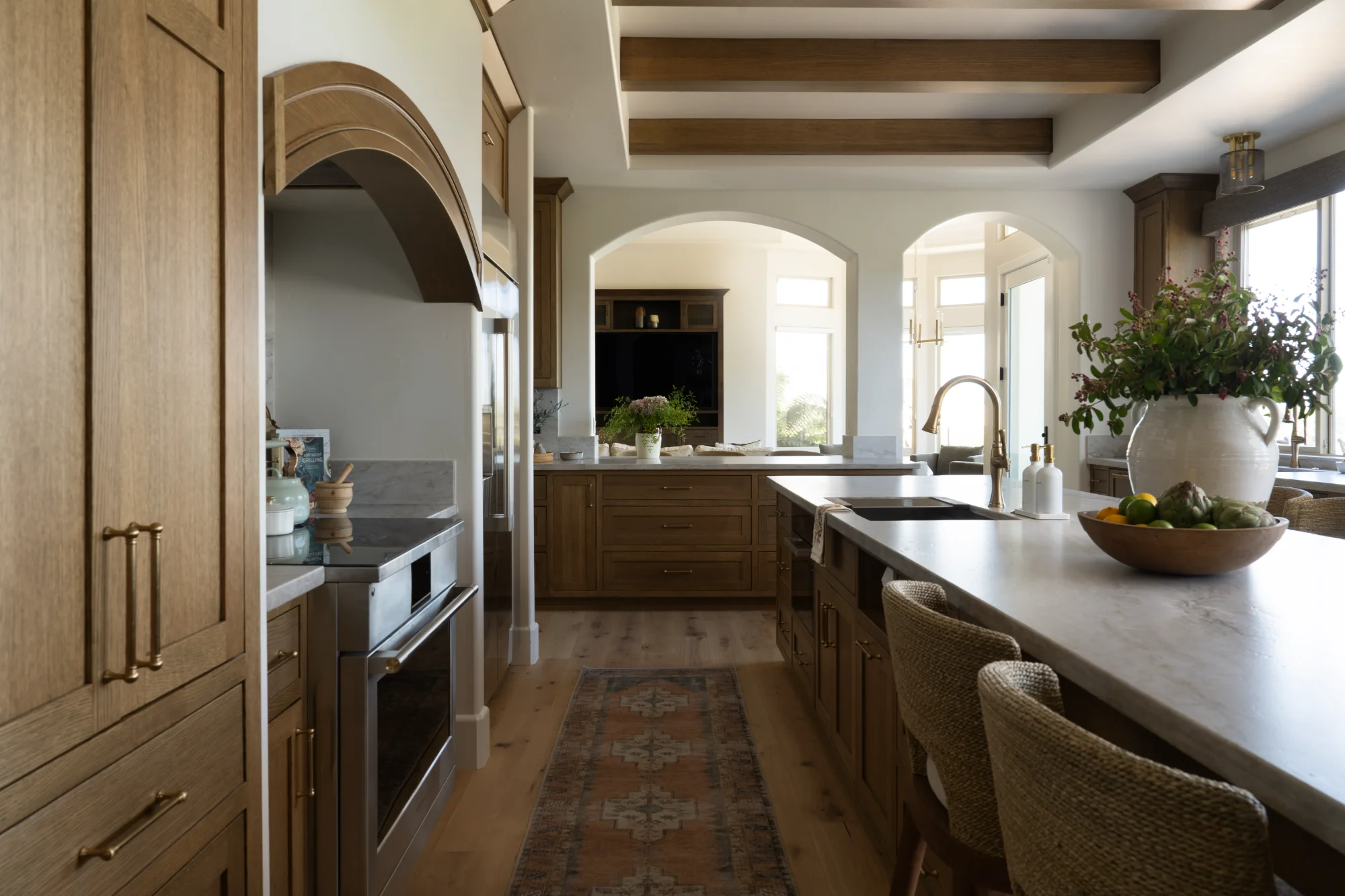
When most people picture a high-end kitchen, they picture finishes: beautiful stone, statement appliances, a hood that anchors the whole room. Those things matter. The difference is, in a genuinely high-end kitchen, the layout works just as hard as the stone.
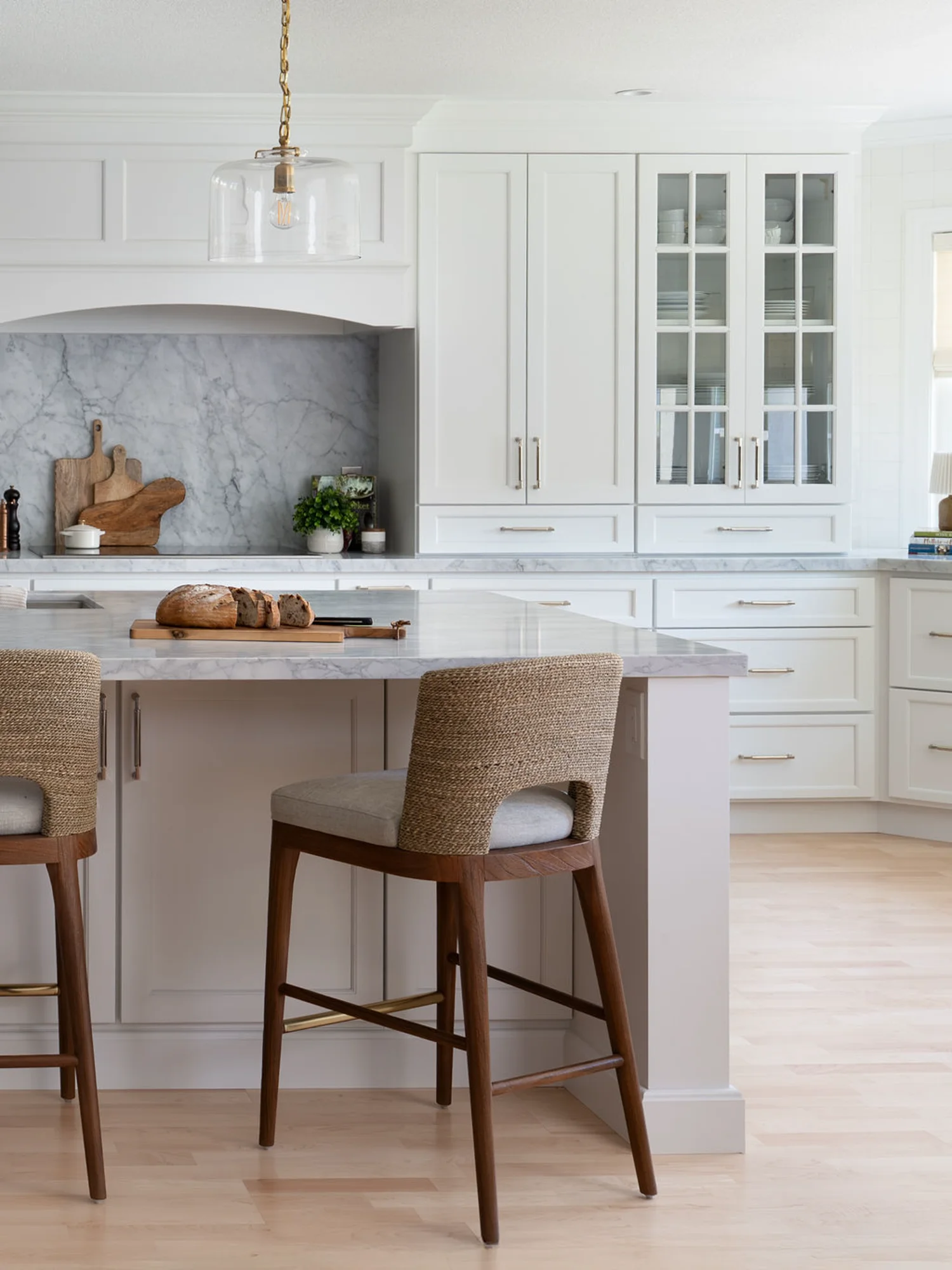
What makes a kitchen high-end is customization, function, and longevity. It's cabinetry built specifically for the way your family cooks, not adapted from a standard size. It's appliances from quality brands like Sub-Zero, Wolf, and Miele integrated into the layout rather than placed within it. Lighting plans are designed around where you work, storage solves real problems, and millwork details give the space its soul.
In Sacramento, that often means leaning into the traditional sensibility that most homes here call for: more detailing on cabinet doors, layered finishes, and custom profiles. Together, these details create the kind of craft you may not notice consciously.
A kitchen like this doesn't just look beautiful on the day it's finished. It works beautifully on a Tuesday night three years later.
It’s rarely one dramatic decision that stretches a budget. In my experience, it's the accumulation of choices that drives the cost. Here's what I walk every client through so nothing catches them off guard.
Moving plumbing, gas lines, or electrical systems costs more than most people expect, and not just because of the fixtures themselves.
In many Sacramento homes, plumbing runs beneath a concrete slab foundation, which means moving a drain or water line requires cutting through that concrete before any plumbing work can even begin. Relocating a sink or a range affects the slab, the subfloor, inspections, and labor in ways that ripple through the whole project.
When a client wants to move the cooktop to the island, I make sure we've talked through what that involves before it becomes a line item surprise mid-construction.
This is the category that can shift a budget most significantly, and it's also the one clients are least prepared for. Many walls in a home are load-bearing, meaning they carry the weight of the structure above them. Removing one requires an engineer to specify the right beam size and a permit to confirm it's done safely, and that process adds both time and cost before a single finish is selected.
One project we completed required removing a full wall of arches to open the kitchen to the rest of the home. The structural work alone represented a significant share of the total budget before anything else was even discussed.
The key to staying on budget is knowing the cost of structural changes before you commit, not after demolition has begun.
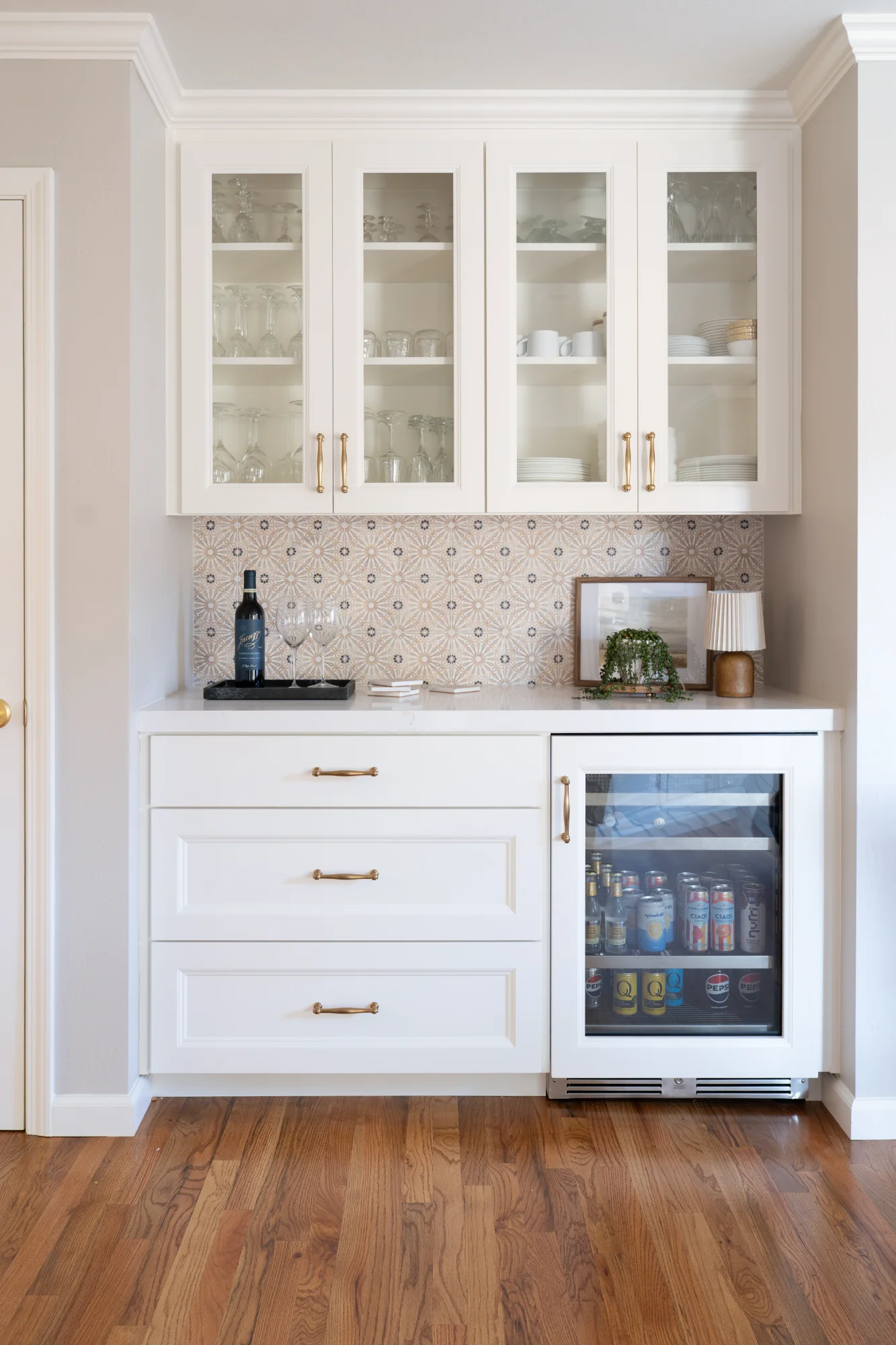
About half of the materials budget in a high-end kitchen typically goes to cabinetry alone. That number surprises almost every client the first time they hear it, and I get why. But when we walk through what custom cabinetry actually includes, it clicks.
You're not paying for boxes. You're paying for storage that is designed around the way your family moves through a kitchen every day. That includes custom inserts, interior lighting, charging drawers, appliance garages, and pull-out systems built around how you actually cook. That level of craft takes time and skill, and it's what makes the difference between a kitchen that looks beautiful and one that feels effortless to live in.
Appliances are one of the most personal decisions in a kitchen. Some clients want restaurant-level cooking power. Others want simplicity. It's important for me to understand your priorities and your dream appliances before we start the budget conversation.
For example, I had a client who always wanted a steam oven because healthy cooking was important to her family. That shaped the whole appliance plan and her budget. Specialty appliances don’t feel like indulgences if they're built into the plan from the beginning.
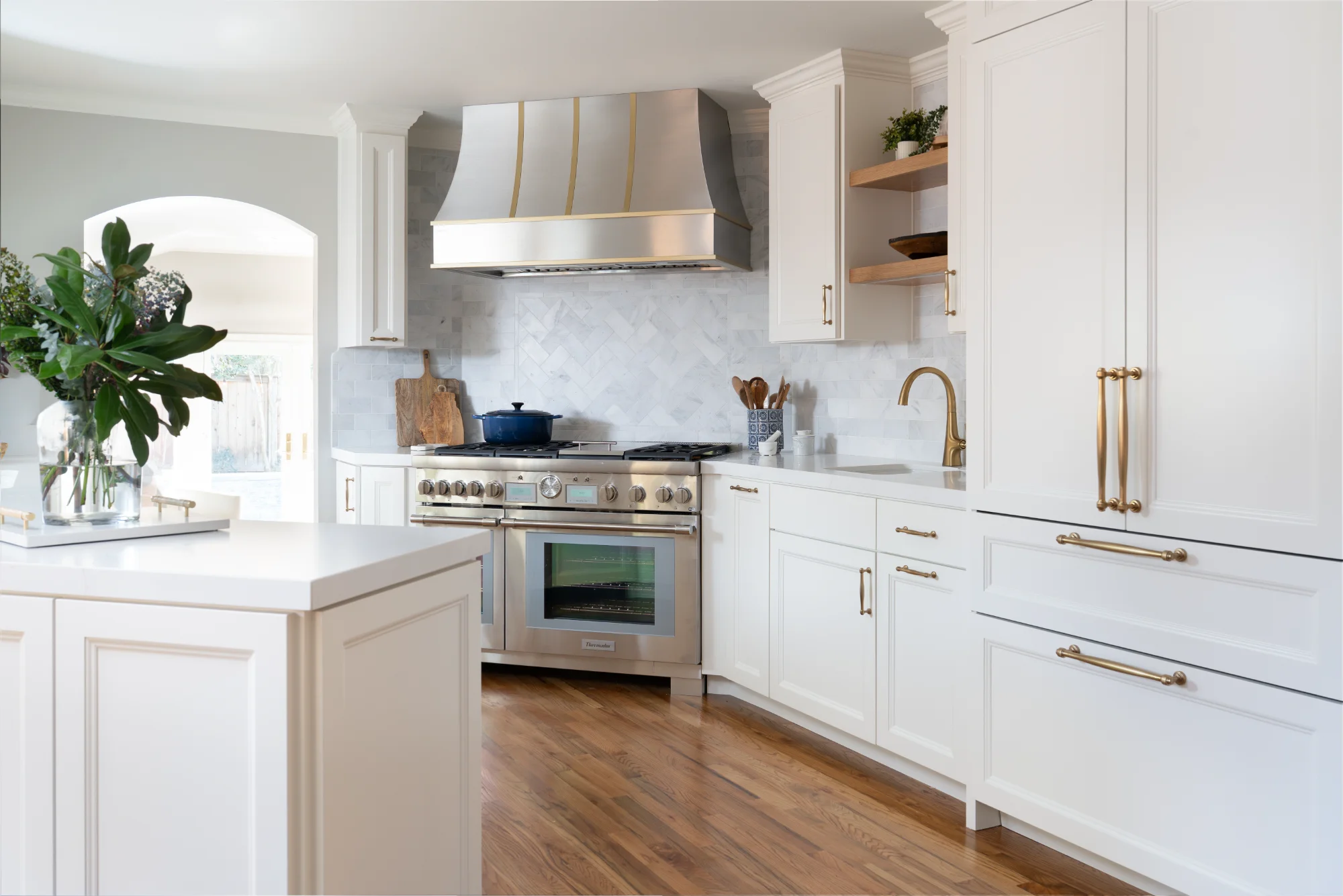
It's also worth understanding what integrated means in practice: integrated appliances are built flush into the cabinetry with custom panel fronts, so they disappear into the design rather than sitting as separate freestanding units. That seamless look is part of what defines a high-end kitchen, and the price reflects it.
The difference between a $50 per square foot tile and a $115 per square foot specialty tile adds up quickly, and it's not just the material cost. The more intricate the installation, the more skilled labor it requires, and skilled labor is priced accordingly.
One client had her heart set on a quartzite countertop, a premium natural stone with beautiful movement and a price point to match. We priced it accurately from the start, built the design around it, and carried it from the island through to the backsplash. It became the defining material of the whole kitchen, and because it was planned for rather than added in, it never created a difficult conversation. That's the goal with every selection, and it's only possible when the design comes before the pricing.
The most common question I hear after sharing investment ranges is: what actually makes the difference? The answer is almost never one dramatic decision. It's the cumulative effect of choices made across every category, from cabinetry and appliances to tile, fixtures, and countertops. These two projects show exactly what that looks like in practice. Material figures are noted separately, but the total investment (including labor) is included, so you have a complete picture.
This was a family that cooked together, hosted often, and needed a kitchen that could keep up. Their original cooktop sat on a small island with barely enough room to set anything down. The lighting was placed where it looked balanced, not where it helped anyone work. For this family, the priority was clear: a highly functional kitchen with a high finish level throughout.
The transformation focused entirely on function and quality. A larger professional range gave two people room to cook at the same time, each with proper space to work on either side. Two sinks meant cooking and cleanup could happen simultaneously without anyone getting in anyone else's way. Premium stone carried from the island through to the backsplash tied the space together, and the cabinetry, about $80,000 of the materials budget on its own, was fully custom with Wolf and Sub-Zero appliances integrated throughout. Plumbing fixtures, lighting, and a specialty backsplash tile at approximately $100 per square foot in a feature area all contributed to the higher finish level. Each of those decisions is relatively contained on its own. Together, they define the investment.
This project involved a similarly large kitchen with no layout changes. The family wanted a refreshed, functional space without the complexity of moving plumbing or reconfiguring the floor plan. That single decision, keeping the existing layout, removed a significant layer of cost before anything else was discussed.
From there, finish selections were made thoughtfully but at a more moderate level throughout. Semi-custom cabinetry replaced fully custom. Built-in appliances were specified rather than Sub-Zero or Wolf. Countertops were quartz and granite rather than quartzite or marble. Backsplash tile ran approximately $5 per square foot rather than a specialty material. Plumbing fixtures and lighting were carefully chosen, but not at a premium tier.
No single swap made the difference. It was the sum of every category landing at a more moderate level that brought the total investment to approximately $150,000, including labor.
A high-end kitchen remodel can look very different depending on where a family decides to put their investment. Both of these kitchens are well-designed, functional, and built to last. The difference is in the level of customization, the tier of materials, and the finish quality applied across every decision. Understanding that relationship early is what allows us to build a plan that reflects your priorities without surprises along the way.
In my experience, budget surprises rarely come out of nowhere. They're the result of decisions that happened too early, too late, or without enough information.
Most contractor estimates are built on allowances, general placeholders for materials that haven't been chosen yet. A contractor might allow $50 per square foot for accent tile. If the design calls for a specialty tile at $115 per square foot, that difference multiplies across the entire installation. By the time a client realizes it, they're already mid-project and out of options.
This is exactly why I build a complete design concept before anything is priced. If the design calls for a specific tile or stone, we price that tile or stone, not a category placeholder. The number a client receives reflects what they're building. No surprises are hiding in the allowances.
When design choices happen during construction, costs increase. Changes affect labor sequencing, material orders, subcontractor schedules, and inspections. I've seen clients fall in love with a tile after demolition has already started. The cost to accommodate that change is always higher than it would have been at the planning stage, sometimes significantly. The decisions that feel small in the showroom can be expensive on the job site.
I tell every client the same thing: contingency isn't optional, it's protection. Older homes in established Sacramento neighborhoods regularly reveal surprises once walls are opened. Planning for 10 to 15 percent contingency from the very beginning is one of the most important things we do together, and it's what keeps the process feeling calm when the unexpected does happen.
The first question I ask is always about your investment range. Not to lock you into a number, but because without it, I genuinely can't guide you well. A $3,000 appliance budget and a $20,000 appliance budget lead me to completely different vendors, different selections, and a different design direction entirely. The budget isn't a constraint on the process. It's the foundation of it.
Many clients hold their real number back at first, and that's completely understandable. What I tell them is to start by telling me everything they want, every dream they have for this kitchen, so we can put a real number to it. If that number is higher than they expected, we have options. We can prioritize. We can make strategic swaps or take certain things out entirely. But we can't make smart decisions without an honest starting point, and I'd rather have that conversation early than have a client fall in love with something we can't build within their budget.
Before a single finish is discussed, I want to understand how your family really lives. Who cooks, and how often? How many people are in the kitchen at the same time? Do you entertain regularly? Is there a way you want your family to connect in this space?
I ask the questions you may not expect from a designer, and those questions are what shape everything that follows.
Inspiration images are a starting point, not a plan. Before anything is priced, I develop a complete design concept that includes the confirmed layout, cabinetry configuration, appliance direction, lighting plan, and material selections. That concept goes to the contractor for a feasibility review before it's ever presented to the client as final. If something needs to be adjusted, we change it during the design stage, not after construction has begun.
Once the project is underway, I maintain a materials budget sheet so every selection can be evaluated in real time against the overall number. Clients tell me this is one of the things they value most. When you're in the middle of a remodel, it can feel like you're writing check after check with no clear sense of where the money is going. Knowing that someone is watching that number carefully, line by line, is what keeps the process feeling organized and managed rather than overwhelming.
One of the first questions I get is how long this is going to take. The honest answer depends on your project, but here's what most families can expect:
I'd rather spend an extra month in planning than have a client making expensive decisions mid-construction. That time upfront is what keeps the budget intact, the timeline on track, and the final result looking the way it should.
And that is exactly the process we build every project around.
A kitchen remodel is one of the most significant investments you'll make in your home. It deserves a process that protects it.
What I want every client to feel at the end of this is simple: That they were in good hands. That nothing came as a surprise. That the kitchen they ended up with works beautifully for the life they're actually living.
Every kitchen remodel at Harty Interiors starts with a MasterPlan, our pre-construction planning framework that defines layout, priorities, and budget direction before anything is priced or built. It's what gives you a clear picture of what you're building, what it will cost, and why, before a single dollar is committed to construction. Learn More About The Harty MasterPlan.
From there, we'll talk through what level of support makes the most sense for your project. Designer by Your Side keeps me involved during the build as your go-to resource for decisions and guidance. Full Service Design means we lead the project completely, from concept through construction. The MasterPlan is the starting point for both.
If you're thinking about a kitchen remodel, let's talk. We'll help you understand what's realistic for your home, your budget, and your timeline before you commit to anything.
You don't need to have everything figured out before you reach out. That's what the first conversation is for.


